Conflicting Theories Of Capital Market Efficiency: A Reassessment Of The Evidential Corpora (2008)
The issue of capital market efficiency is of optimum importance with far-reaching implications for academia as well as for industry. This research study has attempted to critically reassess the controversy surrounding the efficiency of capital markets with specific reference to the Efficient Markets Hypothesis (EMH) and Behavioural Finance. The evidential corpora concerning these two conflicting theories have been reassessed in order to ascertain the possibility and level of efficiency inherent within the capital markets.
Moreover, the two theories have been critically appraised in order to explore the extent to which Behavioural Finance has been seen to undermine the theory of efficient markets. These objectives have been achieved by using a multi-perspectival discourse analytical approach as a research method to deconstruct secondary documentary data. In the final analysis a reconciliatory approach to the dissonance between the EMH and Behavioural Finance is explored with a view to opening up a new dimension to the understanding of market behaviour.
It has been concluded that although the insights from Behavioural Finance have considerably undermined the notion of capital market efficiency, however capital markets have been found to be neither highly efficient nor totally inefficient thus resulting in an ambivalent answer to the question of market efficiency. In the end it is aspired that this undertaking will play an important part in helping to identify, and thus better understand the influential dynamics behind the informational efficiency of capital markets.
- 21,000 words – 85 pages in length
- Outstanding use of literature
- Excellent in depth analysis
- Professional written throughout
- Ideal for finance accounting students
1 – Introduction
A Historical Overview of Capital Market Efficiency
Research Questions and Objectives
Purpose and Outline of the Proposed Study
2 – Literature Review
Conflicting Theories of Capital Market Efficiency
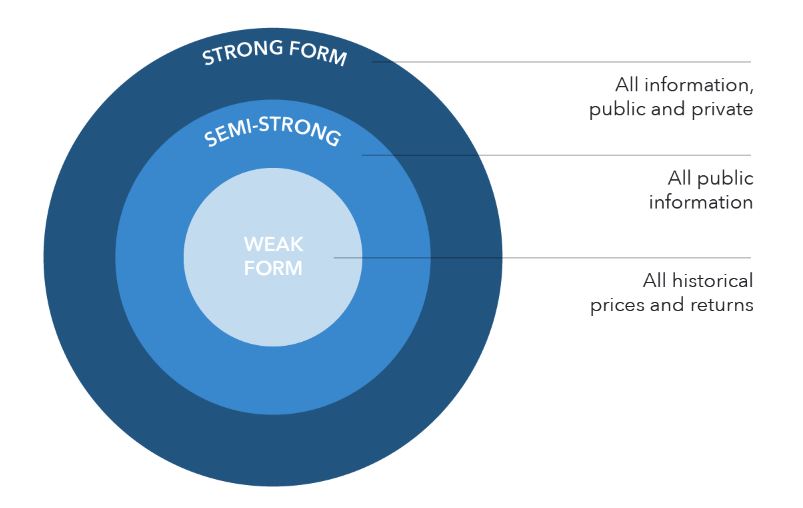
The Efficient Markets Hypothesis (EMH)
Empirical evidence of market efficiency
Tests of weak form efficiency
Tests of semi-strong form efficiency
Tests of strong form efficiency
Empirical Evidence of Anomalous Stock Market Behaviour
Behavioural Finance
Investor Rationality
3 – Research Methodology
Research and Research Methodology
Types of Research Methodology
Research Methods
Quantitative Methods
Qualitative Methods
Differences between Quantitative and Qualitative Research Methods
Research Design
Purpose of the Research Enquiry
Methods of Data Collection
Secondary Data
Methods of Data Analysis
Discourse Analytical Approach
Critical Discourse Analysis (CDA)
Historical Discourse Analysis (HDA)
Intertextual Analysis (ITA)
Justifications for the Selected Research Methodology and Design
Limitations and Difficulties of the proposed Study
4 – Analysis of Data
Conflicting Theories of Capital Market Efficiency
The Efficient Markets Hypothesis vs. Behavioural Finance
Reassessing Theoretical Controversies
Investor Rationality vs. Investor Psychology
Riskless Arbitrage vs. Limits to Arbitrage
Reassessing Empirical Conflicts
Stock Return Unpredictability vs. Anomalous Market Behaviour
Behavioural Finance as a Quasi-Panacea
A Reconciliatory Approach to Capital Market Efficiency
The Adaptive Markets Hypothesis (AMH)
5 – Conclusions, Recommendations and Reflections
Conclusions regarding the Research Questions
Recommendations
Implications for Theory and Practice
Reflections
Bibliography
References